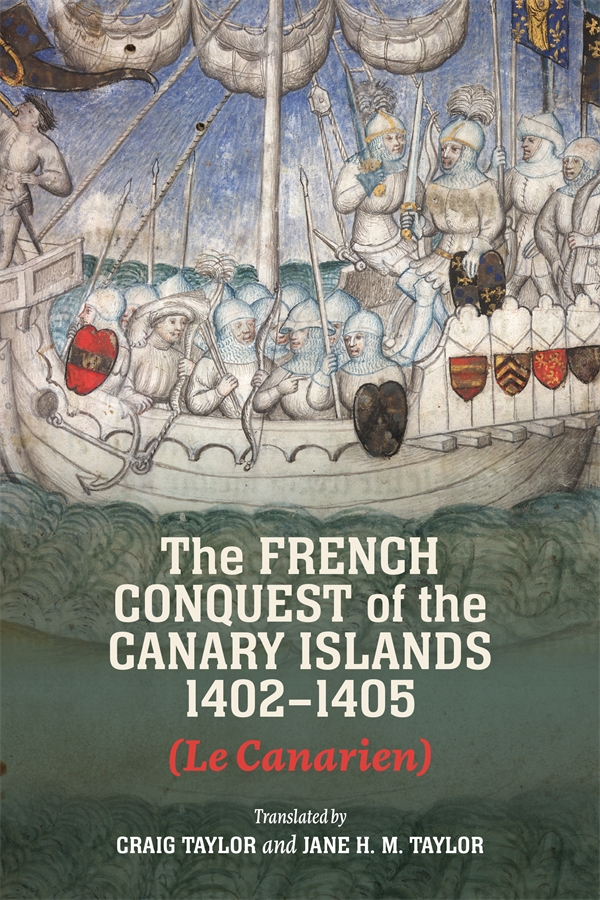
A translation of two rival accounts of an expedition that deteriorated into friction and feuding, offering an unusually intimate view of chivalry and conquest at the close of the Middle Ages.
The Hungry City draws together multiple lives and narrative strands to focus on a single point in time, what one Catalan chronicler referred to as "the first bad year," providing a dynamic new perspective on the history of Barcelona and the medieval Mediterranean.
Written around 1430, Duarte of Portugal's remarkable treatise on chivalric horsemanship, the Livro do Cavalgar (Book on Riding), is the sole substantial contemporary source to survive on the definitive physical skill of the medieval knight
The essays in this volume explore how al-Andalus has been transformed into a "travelling concept": that is, a place in time that has transcended its original geographic and historical location to become a figure of thought with global reach.
The present book is a complex approach to the elements that built the Catalan national identity, which can only be analyzed through its complexity and longue durée historical times. Regarding medieval and early modern centuries, the territorial construction, law and state are presented, along with the complexity added by the appearance of composite monarchies in the 16th century, and taking into account the significance of constructing a literary and historiographic tradition to define national character.
The Bayeux Tapestry is one of the most extraordinary artefacts to survive from the eleventh century. A fragile web of woollen thread on linen, its brilliant colours undimmed after nearly a thousand years, this masterpiece is unique as a complete example of an art form beloved of the aristocracy in the Romanesque era - the `historiated' or narrative embroidery. This book presents a full-colour reproduction of the entire Tapestry, with a detailed commentary alongside each episode, equipping the reader to follow the story blow by blow and this marvellous work of art step by step.
This volume explores a millennium of multilingual literary exchanges among the peoples of Sicily, the Iberian Peninsula, and North Africa: the Maghrib, or westernmost strongholds of medieval Islam. Beginning in the seventh century, Muslim expansion into the western Mediterranean initiated a new phase in the layering of heterogeneous peoples and languages in this perennial contact zone: Arabs and Berbers, Christians and Jews, Sunni and Shii'a Muslims, Greeks and Latins all shaped shared and contested identities, hybrid genealogies of knowledge, and fragile but vital political alliances.
Today, the literary patronage of Alfonso X 'the Learned' of Castile (1252-1284) seems extraordinary for its time in the context of Europe. His cultural programme, which promoted his royal status and imperial ambitions, was hugely ambitious, and the paucity of information about the intellectual circumstances in which it took place magnifies the scope of Alfonso's achievements still further.
Utilizamos cookies próprios necessários para o funcionamento do site e, apenas se aceitar, cookies do Google Analytics para contar as nossas visitas. Pode alterar a sua escolha a qualquer momento no link «Cookies».
Cookie
Titular
Finalidade
Duração
ibs_consent
Iberian Book Services
Guarda a sua escolha sobre cookies (necessário).
12 meses
pll_language
Iberian Book Services
Lembra o idioma do site (necessário).
12 meses
_GRECAPTCHA
Google (reCAPTCHA)
Protege o formulário de contacto contra spam (necessário).
6 meses
_ga, _ga_*
Google (Analytics)
Estatísticas anónimas de utilização. Apenas se aceitar.