This book offers the first interdisciplinary and contextualised analysis of the relationship between art and politics in Renau’s work at the time of Spain’s pivotal attempt to pursue democratic forms of modernisation. It traces the connections between Renau’s political goals and the specific visual strategies he deployed, providing a comprehensive historical assessment of his attempts to turn protean theory into effective practice.
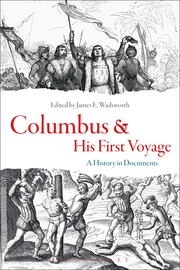
Columbus and His First Voyage brings together for the first time the two contemporary versions of what happened on the first voyage – the Columbian narrative and the Pinzón narrative – and embeds them in a thorough introduction to Columbus, his first voyage, and the myths that surround this pivotal event in the history of the modern world.
Esta investigação centrou-se nos portugueses residentes na Áustria e procurou descrever o comportamento da língua portuguesa em contacto com as diferentes línguas estrangeiras com as quais convive em contexto austríaco e as consequências daí decorrentes.
This classic of overseas Portuguese history is a well-known source cited by historians of Portuguese Asia, yet it has remained beyond the reach of a larger audience until this translation — its first into any other language.
In the last fifty years Spain has experienced major changes regarding population movements and the perception the Spanish have concerning emigration and immigration as well as emigrants and immigrants. In short, in a few years it has gone from emigrating to receiving a significant flow of foreign immigration to again becoming issuers of people to Europe while immigration is still reaching the Spanish borders. All of this has led to growth in Spain’s interest in the study of international migration, its impacts on the origin and destination, designed integration policies and their implementation, as well as international comparisons.
Taking as a starting point an interpretation of the television medium as an Ideological State Apparatus, this book examines how gender roles and non-heteronormative sexualities are constructed in Spanish and Catalan television series. As such, this book addresses the role performed by television in the construction of meanings which surround gender issues and non-heteronormative sexualities.
This book argues for the importance that Ramiro de Maeztu's relationship with England had on both his intellectual trajectory and on the culture and politics of Spain during this time. Particular attention is devoted to Maeztu's London period (1905-1919), which provides a fascinating insight into how Spaniards of the time perceived not just Britain but Western Europe as a whole.
This collection of essays provides both critical and interdisciplinary means for thinking across diasporic travels within the Portuguese experience and its intersection with other peoples and cultures.
Mia Couto is known for his imaginative re-working of Portuguese, making it distinctively Mozambican in character. This book brings together some of the key scholars of his work such as Phillip Rothwell, Luís Madureira, and his long-time English translator David Brookshaw. Contributors examine not only his early works, which were written in the context of the 16-year post-independence civil war in Mozambique, but also the wide span of Couto's contemporary writing as a novelist, short story writer, poet and essayist.
This fascinating study of newspapers in 1920s Portugal explores how the new “modernist reportage” embodied the spirit of the era while mediating some of its most spectacular episodes, from political upheavals to lurid crimes of passion.
We use our own cookies that the site needs to work and, only if you accept, Google Analytics cookies to count our visits. You can change your choice at any time from the "Cookies" link.
Cookie
Provider
Purpose
Duration
ibs_consent
Iberian Book Services
Stores your cookie choice (necessary).
12 months
pll_language
Iberian Book Services
Remembers the site language (necessary).
12 months
_GRECAPTCHA
Google (reCAPTCHA)
Protects the contact form against spam (necessary).