-
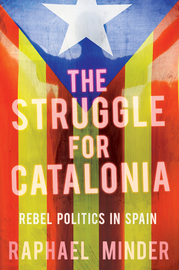 The Struggle for Catalonia
Analyses with rare impartiality what sets the Catalans apart from Spain, and how the separatist debate is playing out. The Struggle for Catalonia looks at how and why Catalan separatism reached the top of Spain’s political agenda, as well as its connection to the broader European malaise generated by flawed political responses to financial and other crises.
Continue reading » -
 Spanish Lessons
Though unjustly neglected by English-language audiences, Spanish film and television not only represent a remarkably influential and vibrant cultural industry; they are also a fertile site of innovation in the production of “transmedia” works that bridge narrative forms.
Continue reading » -
 Celestina and the Human Condition in Early Modern Spain and Italy
Celestina by Fernando de Rojas is a canonical work of late medieval Spanish literature and one of the earliest European "best-sellers". However, while we have clear evidence of its popularity and influence due to detailed research on its print history and editions, we have not adequately answered the question of precisely why it continued to hold such appeal for early modern audiences.
Continue reading » -
 The Politics and Rhetoric of Commemoration
In recent years there has been much interest in collective memory and commemoration. It is often assumed that when nations celebrate a historic day, they put aside the divisions of the present to recall the past in a spirit of unity. As Billig and Marinho show, this does not apply to the Portuguese parliament’s annual celebration of 25 April 1974, the day when the dictatorship, established by Salazar and continued by Caetano, was finally overthrown. Most speakers at the ceremony say little about the actual events of the day itself; and in their speeches they continue with the partisan politics of the present as combatively as ever.
Continue reading » -
 Feminine Singular: Women Growing Up Through Life-Writing in the Luso-Hispanic World
Women have often chosen to tell their secrets, confide their dreams and express their deepest and most intimate thoughts in diaries, letters and other forms of life-writing. Although it is well established as a genre in the Anglophone and Francophone traditions, there has been very little publication of life-writing in the Hispanic and Lusophone worlds and even less scholarly criticism has appeared.
Continue reading » -
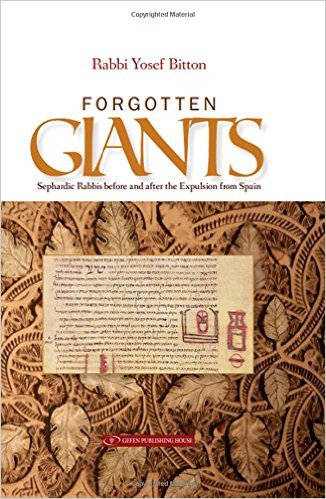 Forgotten Giants
Rabbi Bitton in his book, Forgotten Giants portrays the expulsion from Spain in 1492 is the central event of Spanish Jewish history. The book explores the lives, works, and ideas of twenty-six Sephardic Rabbis in the fifteenth, sixteenth, and seventeenth centuries, in the time period straddling this upheaval. Through the narratives of these twenty-six prominent rabbis’ lives, we learn about the world of the Jews in Spain before the 1492 expulsion, the struggles of the rabbinical leadership against the missionary efforts of the Church to convert the Jews, and the theological debates that took place, especially during the beginning of the fifteenth century.
Continue reading » -
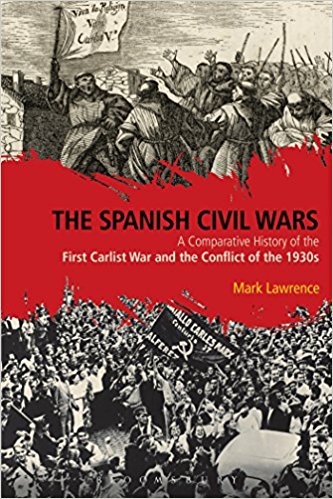 The Spanish Civil Wars: A Comparative History of the First Carlist War and the Conflict of the 1930s
This book provides a comparative history of the domestic and international nature of Spain’s First Carlist War (1833-40) and the Spanish Civil War (1936-39), as well as the impact of both conflicts.
Continue reading » -
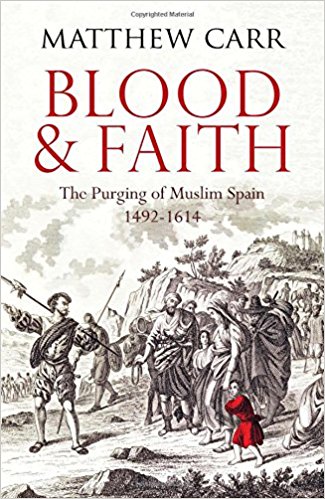 Blood and Faith: The Purging of Muslim Spain, 1492-1614
Blood and Faith is celebrated journalist Matthew Carr's riveting chronicle of this virtually unknown episode, set against the vivid historical backdrop of the history of Muslim Spain. Here is a remarkable window onto a little-known period in modern Europe—a rich and complex tale of competing faiths and beliefs, of cultural oppression and resistance against overwhelming odds.
Continue reading »


